
Precision and Component Placement in PCB Assembly Operations
Design Tips to Increase PCB Assembly Efficiency
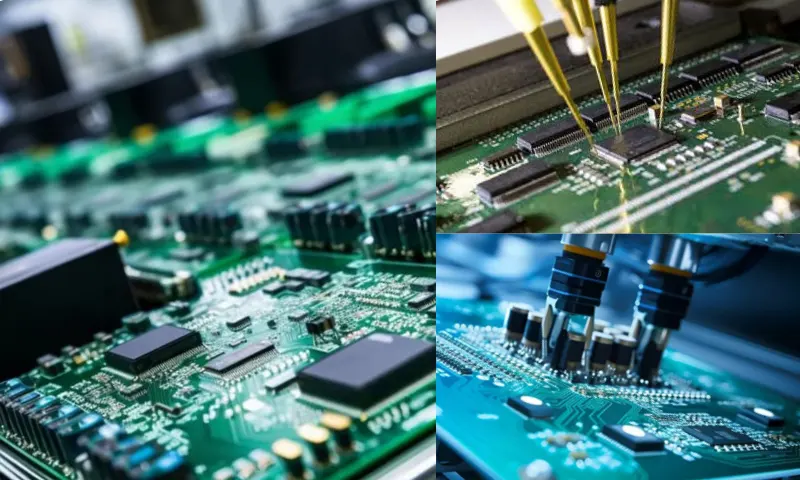
Once the PCB assembly process begins, the advantages brought by surface mount technology (SMT) must be fully utilized. As components in modern board designs become smaller and smaller, placing these parts on the board with millimeter accuracy becomes a necessity. So, what distinguishes a good assembly line from others? The answer lies in soldering quality and the optical inspections performed after assembly. For detailed information and our solutions, you can examine our production standards by visiting https://www.sceelektronik.com/hizmetlerimiz/pcb-dizgi/. The fact that even a small assembly error can render an entire project unusable pushes us to be more meticulous at every point.
Some critical points to consider for a board to be long-lasting are:
- Solder Paste Quality: The consistency and amount of solder used in the screen printing phase should reduce the risk of cold solder joints to zero.
- Thermal Profiles: Special heat settings should be made during the reflow phase according to the layer count and component density of each board.
- Component Compatibility: The thermal expansion coefficients of all parts, from passive components to the most complex microprocessors, must be calculated.
The Future and Next-Generation Solutions in PCB Assembly Technologies
DFM (Design for Manufacturing) analyses performed before proceeding to the PCB assembly stage directly affect costs. The stronger the communication between the designer and the manufacturer, the lower the error margin. Generally, tracks on the board being too close to each other or non-standard pad structures cause disruptions in mass production. Therefore, feedback received during the prototyping phase sets the course for mass production. Repeatability is as important as speed on the production line. There should be no electrical or physical difference between the tenth board and the ten-thousandth board. Achieving this stability is possible not only with a good machine park but also with the technical depth of the personnel. PCB assembly technologies are transforming with wearable devices and the Internet of Things (IoT). More flexible and denser board structures are now being discussed. With the integration of Industry 4.0 standards into production lines, data tracking and process analysis have become much more transparent. The success of a board is measured not only by its functionality but also by how long it resists harsh conditions in the field. As the engineering world pushes the boundaries with its designs, the quality of the physical touches that bring these designs to life will always remain the decisive factor. The future is shaped by those who can predict even errors at the micron level.