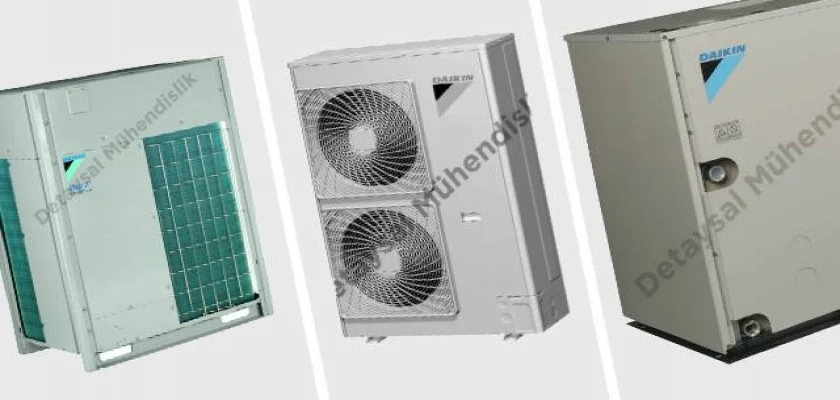
What is the Hi-VRV System?
In particular, over the last 10 years, glass and glass-like thermal insulation systems have started to be used on the surfaces of many architectural designs to benefit from solar energy. It has been understood that the energy gained can only be used correctly and in line with needs with an air conditioning system. Therefore, air conditioning systems have become an integral concept of newly built buildings. Due to the increase in the use of electronic offices, indoor temperatures reaching extreme levels even in winter and causing discomfort have increased the use of air conditioning systems. Similarly, extreme heat in the summer has also contributed to the increased use of the system. Such uncomfortable air temperature levels have made air conditioning systems an indispensable part of buildings. Likewise, the ability to ventilate common areas has also expanded the application areas of Hi-VRV systems. Hi-VRV systems are products used in the utilization of solar energy and the provision of air exchange in the areas used.
There are multiple energy saving systems on the market. However, not every system provides the necessary hardware and facilities. Furthermore, their high prices are also a negative aspect. The features that an ideal energy saving system should have are as follows: it should be easy to install. It should be easily installable and easily repairable during renovation. It should also be flexible, reliable, and user-friendly.
Historical Development of VRV
First developed in 1982, the original
Daikin VRV systems introduced the D-series of air conditioning systems to the European market. Especially from the early years, Daikin VRV systems gained more interest due to their affordable prices and practical use. Throughout its historical development, it has released various models. Each model has progressed as an advancement of the previous one. Furthermore, during these developments, there have been awards such as the environmental awareness award. The latest Daikin model developed in 2009 was produced with 9 different outdoor units, ranging from 8hp to 30hp. The latest model, VRV-WIII, is widely preferred worldwide. It should keep the building's air at a usable temperature without consuming excessive energy, and it should also purify the air with minimum energy. It should control the heating and air of medium and large-scale buildings by establishing a central system. Finally, the prices should be affordable. Daikin Hi-VRV systems are quite affordable and capable of meeting all the aforementioned features. It is understood from their widespread preference in recent years that they meet these needs.