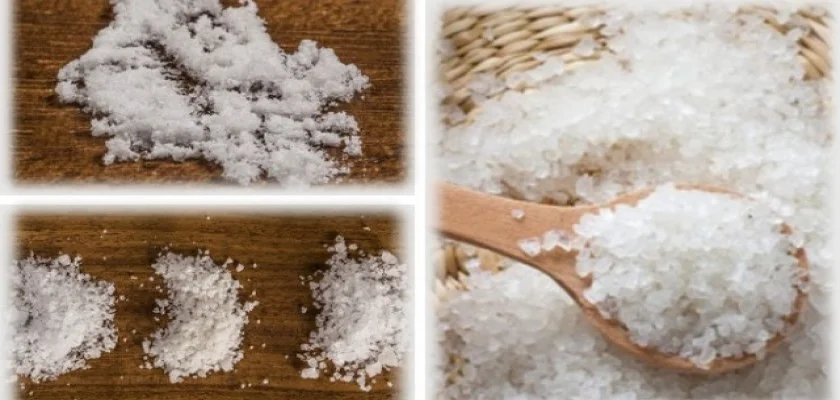
How is Sea Salt Obtained?
Approximately 60% of the world is covered by seas, and seawater generally consists of about 3.5% salt. Consequently, this varies between 1% and 4.5% from sea to sea. The method of obtaining salt varieties from seas, which emerged in ancient times, is now procured in different ways. To obtain salt along the coasts, artificial lakes are created, seawater is taken into these artificial lakes, and it is evaporated using solar energy, with the remaining salt being collected. In the production of sea salts, seawater contains sodium chloride in large quantities, along with 84 elements found in nature that dissolve quickly in water. Sea salt, among these, is quite similar to rock salt and especially crystal salt in terms of elements and trace elements. At the same time, sea salt is also very rich in minerals.
What is Refined Salt?
The general source of refined table salts used in cooking is sea and rock salts, which contain approximately 84 elements. These natural salts are refined, and 82 of these elements and trace elements are removed. After this stage, only pure sodium chloride remains, and after these processes, refined salts have no relation to natural salts. Refined salts, or table salts, among salt varieties, cause more harm than benefit to the human body. The general reasons for this are that table salts are an aggressive substance for the human body and must be expelled; therefore, they should not be used for human health. However, it should be known that sea salts are loaded with heavy metals due to environmental pollution. In addition, it should be known that all sea salts are refined within them.